




A classic blockchain is decentralized — data is stored simultaneously on thousands of computers around the world. This is its main protection. Hacking a single computer is difficult but possible. Hacking more than half of the computers in the network at the same time is practically impossible. This is how blockchain ensures the security of your data and transactions, but it creates another problem — speed. In a traditional database, one computer processes transactions quickly. In a blockchain, every computer in the network processes all transactions simultaneously and performs complex cryptographic calculations to protect against attacks. This requires enormous resources and significantly slows things down.
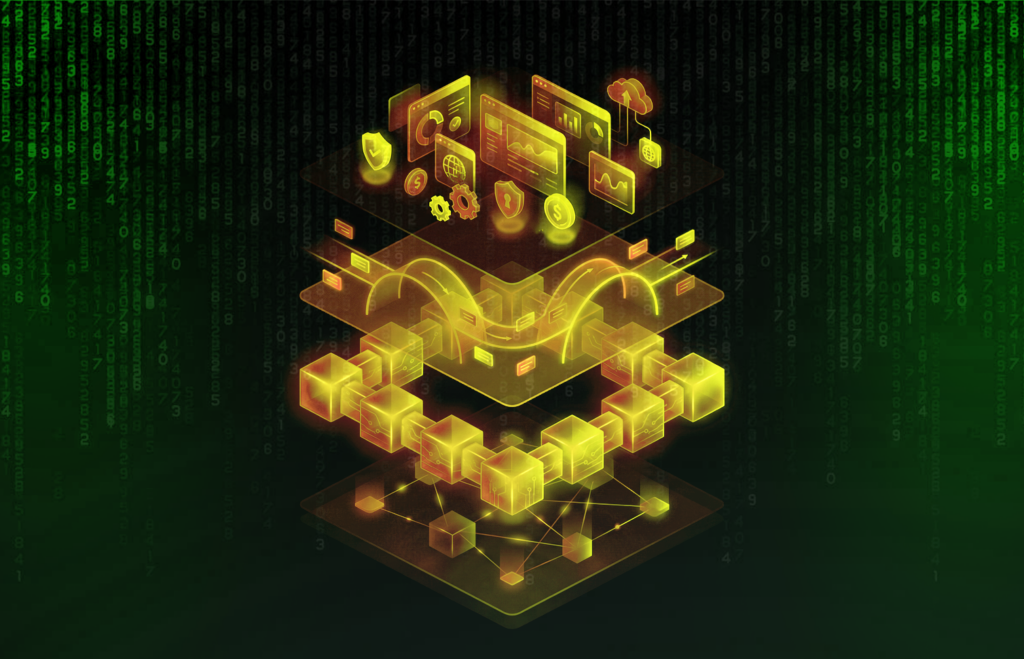
The concept of blockchain layers
The more secure and decentralized a blockchain is, the slower it becomes. You have to choose between three qualities:
- Decentralization (many independent computers in the network)
- Security (protection against attacks)
- Scalability (high transaction processing speed)
It’s impossible to achieve all three at once — you always have to sacrifice something. That’s why developers look for compromises and come up with new solutions. To improve blockchain performance, developers divided it into layers — Layer 0, Layer 1, and Layer 2. Each layer helps solve a specific problem: one focuses on speed, another on security, and a third on interoperability between blockchains.

What is a Layer 1 blockchain?
Layer 1 (L1) refers to the main, classic blockchains such as Bitcoin and Ethereum. They operate independently and do not rely on other networks. Layer 1 performs all core functions:
- Verifies and records transactions (consensus algorithm)
- Manages the issuance of new coins
- Enables smart contracts
- Resolves disputes within the network
Each L1 blockchain has its own cryptocurrency (for example, BTC for Bitcoin, ETH for Ethereum). It serves two purposes: paying transaction fees and rewarding miners or validators for maintaining the network.
The main problem with Layer 1 is that these networks are slow and expensive, but secure and decentralized. For example, Bitcoin processes only about 7 transactions per second, and fees can reach tens of dollars during peak times.
What is a Layer 2 blockchain?
Layer 2 (L2) solutions are accelerators built on top of main blockchains to offload Layer 1 and speed up transaction processing. The principle is simple: L2 handles a large number of small transactions quickly and cheaply, then submits the final result to the main L1 blockchain for permanent recording.
There are state channels — like a private tab between two users outside the main blockchain. A smart contract is created that locks funds in the main network. Users can perform as many transactions as they want within a separate channel. When they’re done, the channel is closed, and only two events are recorded on the main blockchain: opening the channel and closing it with the final balance. Instead of hundreds of transactions, only two are written to the blockchain. This saves time and money.
How it works on top of Layer 1
When Layer 2 operates “on top of” the main blockchain as an additional layer, these are called nested blockchains. L2 processes transactions, while L1 acts as an arbiter — verifying correctness and resolving disputes. A single L1 blockchain can have multiple such nested networks, each speeding up transactions and reducing fees.
There are also sidechains — independent blockchains that run in parallel with the main one and are connected via a special bridge. A sidechain has its own consensus algorithm and validates transactions independently, while still being linked to L1. You send cryptocurrency from the main network to the sidechain — assets are locked on L1. Transactions on the sidechain are fast and cheap. When you move assets back, they are unlocked on the main network.
A key difference from state channels: on a sidechain, all transactions are recorded in the ledger. If a security issue occurs, the entire chain of operations is reverted, and the blockchain rolls back to its initial state.
Get More with Syndicate App


Layer 1 and Layer 2 blockchains: key differences
Layer 1 is slow but maximally secure. Its decentralized structure and strict verification mechanisms guarantee strong protection, but transactions take longer to process. Bitcoin, for example, handles only about 7 transactions per second.
Layer 2 is fast but depends on the security of L1. These networks take on most of the load and process transactions many times faster. Lightning Network, for example, can handle thousands of transactions per second. But if the underlying L1 blockchain is attacked or compromised, L2 will suffer as well.
Layer 1 provides maximum security through decentralization: data is stored on thousands of independent computers, making simultaneous compromise nearly impossible.
Layer 2 does not have its own independent security — it relies on the protection of the base Layer 1 blockchain. This is its weak point: any issue in the main network automatically threatens L2 as well.
Scalability reflects a network’s ability to process large volumes of transactions quickly and cheaply. The two layers address this differently:
- Layer 1 suffers from limited scalability due to decentralization. Every node must verify every transaction, which takes time. Developers try to improve L1 through protocol upgrades, but this is a complex and slow process.
- Layer 2 is designed specifically for scalability. It moves transaction processing outside the main blockchain into sidechains. This unloads the base network and increases throughput by tens or even hundreds of times.
Layer 1 is the foundation with maximum security, but it’s slow. Layer 2 is an add-on that speeds things up by sacrificing some independence.
Will Layer 2 blockchains replace Layer 1 in the future?
Layer 2 will not replace Layer 1 — they complement each other. L1 is the base that provides maximum security and decentralization, while L2 acts as an accelerator that handles large volumes of transactions quickly and cheaply, then records the final result on the main L1 blockchain.
L2 cannot exist without L1 because it has no independent security of its own. If L1 is compromised, L2 will be affected as well. L1 is built for reliability and decentralization, while L2 is built for speed and scalability for mass adoption. L2 processes thousands of transactions outside the main blockchain and then “anchors” them in L1 with a single record. This achieves both speed and security at the same time.
Layer 2 offers low fees: transactions cost cents instead of tens of dollars, with confirmations in seconds rather than minutes.
Layer 1 and Layer 2 will continue to evolve together. L1 will remain the “security core” — a reliable data layer. L2 will become the primary working layer for everyday operations such as payments, gaming, and DeFi applications.
Share this post
Link copied!