




In 2026, capital is flowing much more selectively: not every niche is growing, only the strongest sectors — the ones with real users, fees, infrastructure, institutional interest, and sustainable economics.
That doesn’t mean memecoins or speculative assets will disappear. They’re still part of the market. But if you look at the bigger picture, money is increasingly moving not just into hype, but into products that could become the foundation of the next phase of the crypto industry.
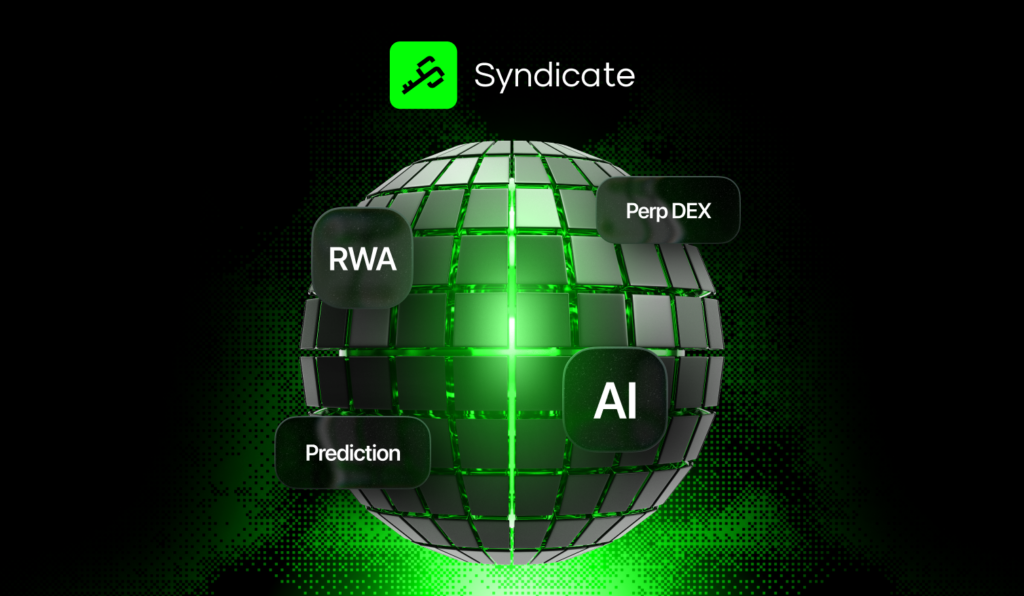
5 Major Narratives for 2026
1. Prediction Markets
Crypto is becoming easier for mainstream users to understand. The idea behind prediction markets is simple: users place bets on the outcome of real-world events. For example, who will win an election, whether regulators will cut interest rates, which team will win a championship, or whether a specific token project will launch before a certain date.
Unlike many crypto products where users first need to understand wallets, networks, gas fees, and complicated mechanics, prediction markets offer a simple model: there’s an event, two possible outcomes, and a probability price. That’s exactly why these platforms can attract users outside the crypto community.
The leading project in this niche is Polymarket. It has long outgrown its image as just another platform for crypto enthusiasts. Interest from major financial and media institutions suggests that prediction markets are increasingly being viewed as a source of data and market sentiment, not just a betting platform. Investments from Intercontinental Exchange, the owner of the New York Stock Exchange, as well as a partnership with Dow Jones, reinforce that view.
Polymarket is also showing serious financial performance. In April, the platform’s monthly fees reached tens of millions of dollars — which already translates into hundreds of millions annually. At the same time, Polymarket captures a significant share of all on-chain prediction market fees.
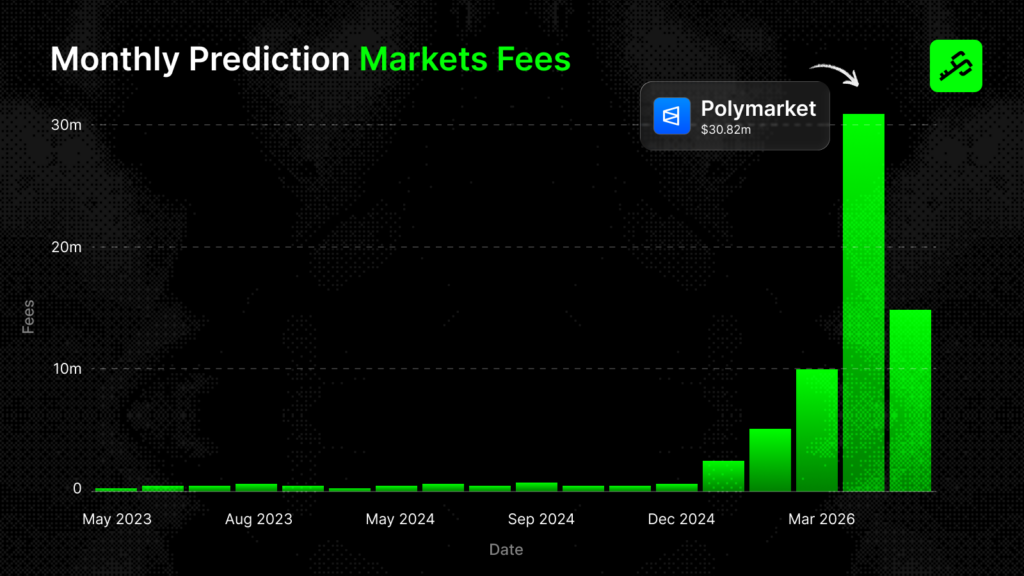
In April 2026, Polymarket generated over $30 million in fees alone!
But the niche is no longer limited to one player. Opinion, Predict Fun, Limitless, and other projects are searching for their audience: some focus on simplicity, others offer bonuses and potential rewards, while others experiment with new formats.
What’s interesting is that many of these projects still don’t have their own token. If one eventually launches, its value could be tied to actual platform metrics — trading volume, fees, and user activity. Not promises, but numbers. That’s what makes the sector attractive for people looking for early opportunities.
2. DEXs: Liquidity Is Moving Into On-Chain Trading
The second major direction is decentralized platforms for futures and perpetual trading. Their growth is tied to the increasing number of users who want to trade actively, use leverage, hedge positions, and avoid depending entirely on centralized exchanges.
For many people, the spot market became a painful experience: they bought an asset “for the long term,” only to watch it crash months later and lose interest entirely. Against that backdrop, derivatives trading looks more dynamic: traders can profit both from upward and downward moves, enter and exit positions quickly, and use different strategies.
The main symbol of this sector has become Hyperliquid. The platform has already proven it can generate hundreds of millions of dollars in revenue. Even after the market cooled down, monthly volumes in the sector remain enormous: despite declining from peak levels, the market still processes hundreds of billions of dollars in monthly trading volume.
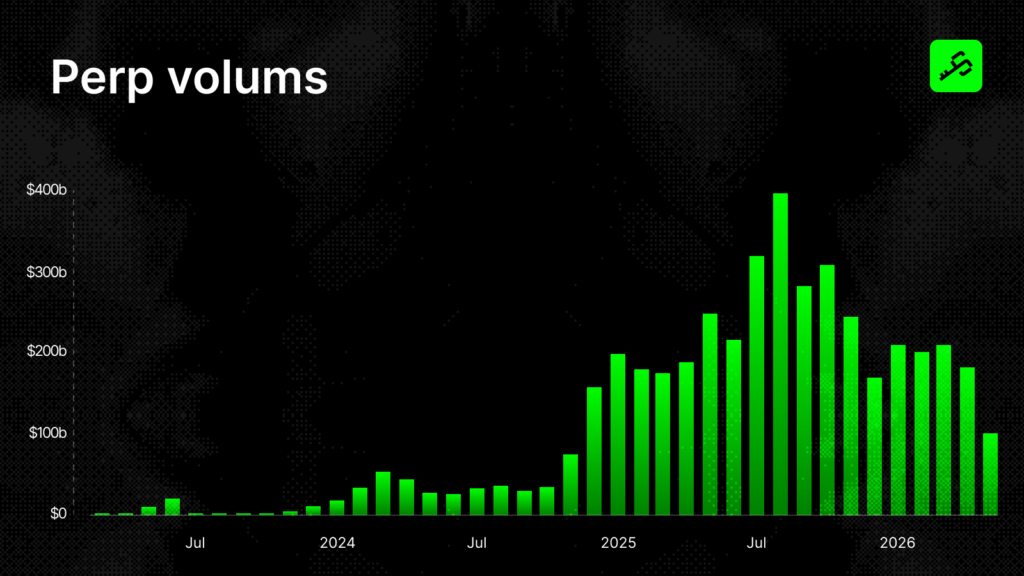
In this segment, it’s worth watching both established projects and emerging platforms. Among the major names are Hyperliquid, dYdX, GMX, Jupiter Perps, and Paradex. There’s also growing interest around projects like Ostium, Variational, Hibachi, Hotstuff, Ethereal, Aster, Lighter, and EdgeX, where users may see points systems, activity programs, future token launches, or early-user distributions.
At the same time, the derivatives sector carries high risk. This is not a “make money effortlessly” category. Large volumes and fees exist precisely because trading remains one of the most active and risky parts of the crypto market. But from a capital flow perspective, it’s nearly impossible to ignore: as long as volatility exists in crypto, demand for these platforms will remain.
3. Infrastructure for Banks, Corporations, and Payment Companies
Early crypto was built around the idea of “removing banks from the financial system.” Today, the situation is much more complex. Banks, payment companies, and large corporations are no longer just watching the crypto market from the sidelines. They are starting to build their own infrastructure or connect to existing systems. This sector is very different from retail crypto products. Memes, hype, and fast multiples don’t matter here. Large institutions need stability, predictable fees, fast settlement, regulatory compliance, asset tokenization, and efficient stablecoin operations.
One key example is Arc from Circle. It’s a network focused on stablecoin financial operations, corporate payments, FX transactions, capital markets, and tokenized assets. Arc’s main advantage is its connection to Circle — the company behind USDC, one of the world’s largest dollar-backed stablecoins.
Another example is Tempo from Stripe and Paradigm. The project focuses on real-world stablecoin payments and is already attracting attention from major companies across fintech, e-commerce, banking, and AI. The involvement of these partners suggests that stablecoins are increasingly viewed as infrastructure for global payments, not just a trader tool.
This broader narrative also includes XRP and the XRP Ledger ecosystem. Despite its controversial reputation and long history, the asset remains closely tied to payments, transfers, and institutional infrastructure. Ripple continues positioning XRP Ledger as a network for settlement, tokenization, and value transfer. The key takeaway from this sector: crypto is increasingly evolving into a foundational layer for institutional and corporate finance. It’s no longer just a market for retail investors. It’s infrastructure that banks, payment services, funds, and large technology companies can potentially use.
4. Decentralized AI and AI Agents
Artificial intelligence has become one of the biggest technological trends of recent years. But in combination with crypto, what matters is not simply the existence of AI — it’s the problems blockchain can solve for a new class of digital agents.
Modern AI systems are mostly centralized. Models belong to large corporations, access can change at any time, datasets are often closed, and outputs are difficult to verify. If AI agents eventually start analyzing markets, managing tasks, making decisions, executing payments, and interacting with each other, an important trust question emerges: who controls the agent, how can its actions be verified, and how will it send or receive payments?
Blockchain can provide several critical components for this ecosystem: digital identity, transparent action history, payment infrastructure, programmable interaction rules, and automated settlement between agents and users.
Projects like Surf are working in this direction. The platform is building AI infrastructure for digital asset analysis and has already attracted backing from crypto-focused funds. The project focuses on market data, on-chain activity, sentiment, and research. Perle focuses on high-quality datasets for model training. The project emphasizes expert labeling and specialist feedback across multiple industries. This matters because strong AI models are impossible without strong training data.
4AI is developing an AI agent marketplace on BNB Chain, where developers and users can create and monetize AI services. This model demonstrates how crypto can become the economic layer for AI agents: not just “a chatbot answering questions,” but an ecosystem where agents complete tasks and get paid for them. The intersection of crypto and AI could become one of the strongest narratives of 2026 because it combines two major technological waves. If AI brings automation and intelligence, blockchain can provide money, identity, and verifiable history.
5. RWA: Real-World Assets Going Digital
RWA stands for the tokenization of real-world assets: bonds, real estate, gold, credit products, funds, and other instruments from traditional finance.
The goal is to make large and often illiquid assets more accessible, divisible, and easier to trade. Real estate, for example, is difficult to sell quickly. Bonds are not always accessible to retail investors. Private markets are often closed to average users. Tokenization attempts to solve these issues through blockchain-based digital representations of assets.
According to RWA.xyz, the market is already measured in tens of billions of dollars.
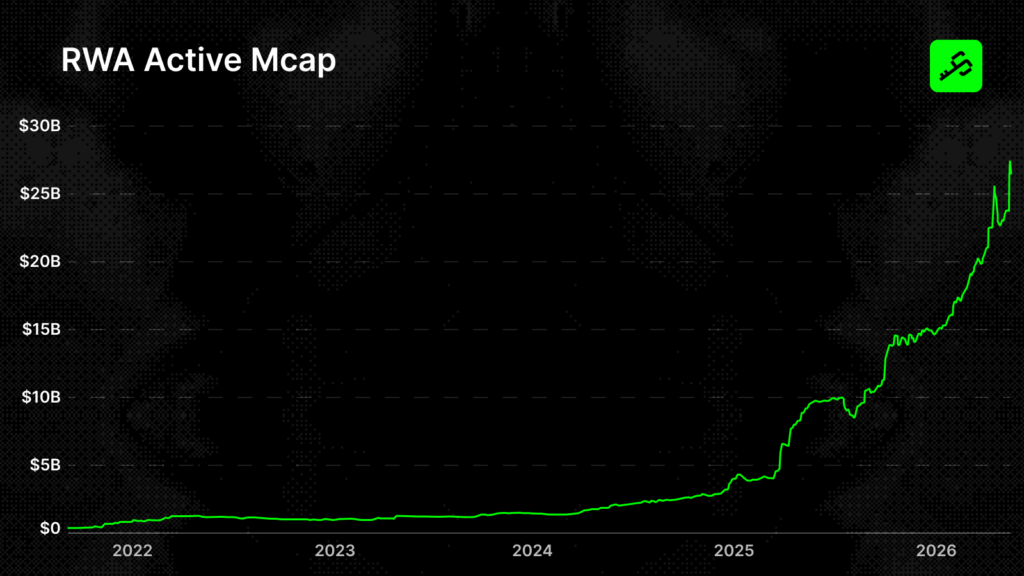
The number of RWA holders is also approaching hundreds of thousands, suggesting the sector is moving beyond the experimental stage. One of the leading projects in the sector is Ondo Finance. The project works with tokenized bonds and equities and has already reached a significant amount of total value locked. Its growth reflects demand for products that combine traditional finance yield with on-chain infrastructure.
Another important example is Canton Network. The network is designed for banks, funds, and major financial institutions, allowing them to bring real-world assets onto blockchain infrastructure while preserving transaction privacy. That’s especially important for institutions, since public blockchains are not always suitable for regulated financial operations. Within the RWA narrative, it’s important to look not only at individual tokens, but also at the infrastructure layer where this market will operate. Ethereum already holds a strong position. Solana may benefit from high speed and low fees, while the ZK ecosystem could become important where privacy, verifiability, and enterprise use cases matter most.
A separate mention goes to Integra — a project attempting to build infrastructure specifically for real estate and real-world asset tokenization, not just “another blockchain,” but a specialized foundation for one of the world’s largest markets.
RWA may appear less exciting than memecoins or trading platforms, but that’s also its strength. The sector is backed not only by crypto users, but also by banks, asset managers, funds, and major financial institutions.
What This Means for Investors and Users
In 2026, it’s important to look not only at token price, but also at what stands behind the project.
- Does it have users?
- Does it generate fees?
- Is there institutional interest?
- Does it solve a real problem?
- Is there a chance for a token launch or stronger utility for an existing token?
In that sense, the sectors listed above are interesting not because they guarantee profits, but because they may become centers of attention, liquidity, and infrastructure growth.
- Prediction markets could become one of crypto’s first truly mainstream products after stablecoins.
- DEXs will likely remain a major source of trading volume and fee generation.
- Infrastructure for banks and corporations could become the bridge between crypto and traditional finance.
- Decentralized AI may open a market where agents operate, transact, and interact entirely on-chain.
- RWA could connect crypto to the massive world of real-world assets.
The 2026 crypto market is becoming more complex and more mature. The simple strategy of “buy anything and wait for the market to go up” is becoming less effective.
Capital is increasingly searching not just for hype, but for sectors with real products, users, fees, infrastructure, and clear demand. The most promising narratives for 2026 can largely be narrowed down to five themes: prediction markets, perp DEXs, institutional infrastructure, decentralized AI, and RWA. But a narrative is not a guarantee of profit. It’s more like a map showing where market attention could move next.
And in crypto, attention often arrives before the money — but after the people who spotted the trend early.

Share this post
Link copied!