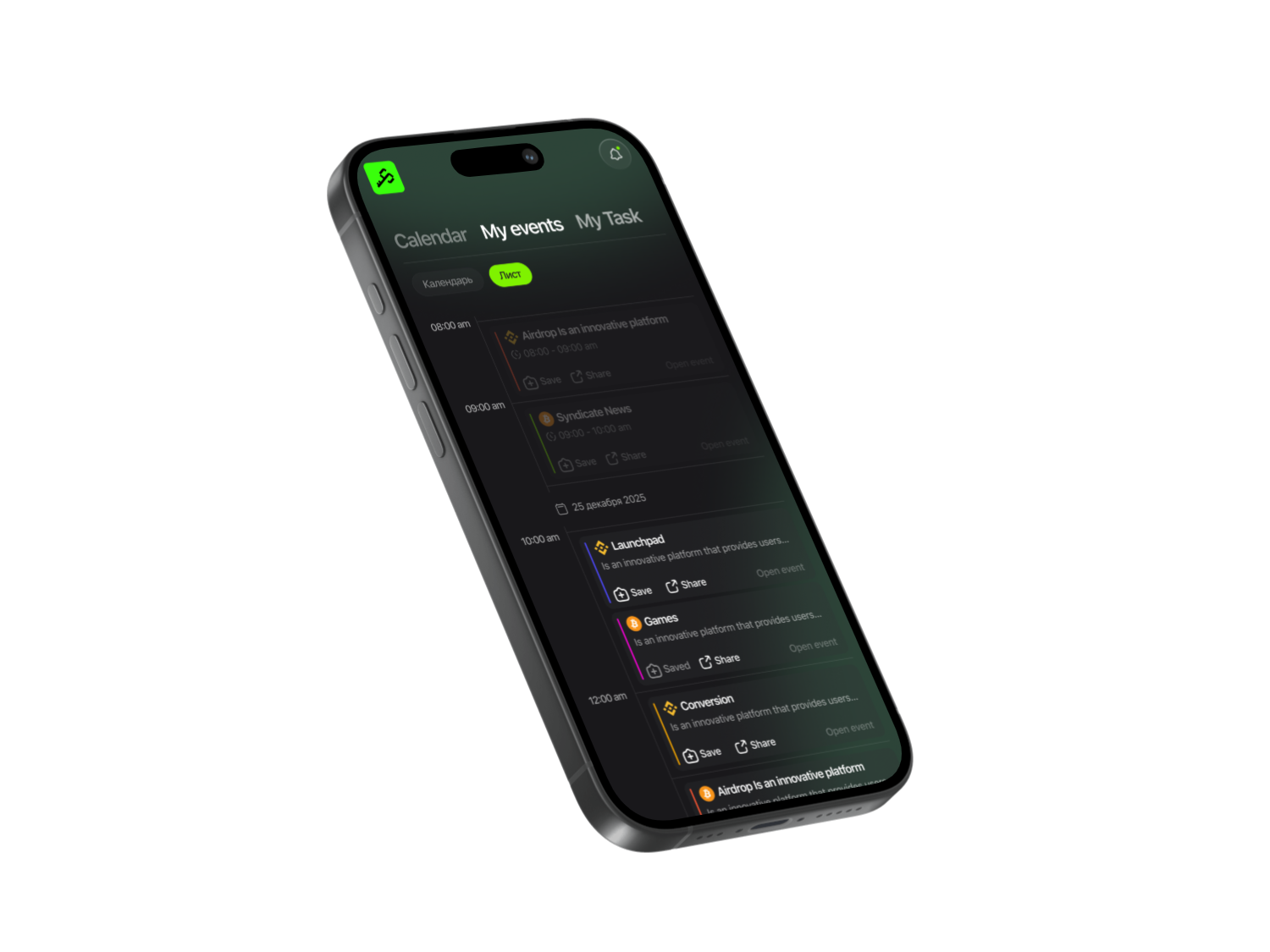






A retrodrop is a free distribution of tokens to users who previously interacted with a blockchain project. We covered this in detail in a separate article. This is one of the most popular ways to earn in the cryptocurrency space that doesn’t require large initial investments. It’s a reward for real participation in the development of the ecosystem.
Where to start with working on retrodrops?
Find potential drops
To receive current information directly from the teams of projects that distribute tokens, you need to be subscribed to channels, news mailings, and join project groups: on X (Twitter), Telegram, Discord, Facebook and Instagram (less popular in the crypto space, but some projects use them to reach a wider audience). On the Syndicate blog and on our social media platforms, we also provide full activity tracking.
Next step: create a crypto wallet (if you don’t have one yet)
We recommend using mobile multi-currency wallets – they allow you to collect all tokens in one application, without the need to create multiple wallets. The most popular: Metamask, Phantom Wallet, OKX Wallet, Trust Wallet.
Create separate social media accounts
To participate in most retrodrops, you need active social media profiles with real followers. Separate accounts allow you to avoid cluttering your personal pages with crypto content and maintain the privacy of your main activities. But make sure to make them look like real accounts: add an avatar, description, a few posts about cryptocurrencies.
Develop your accounts: the more followers and friends you have, the more opportunities for earning from retrodrops. Many projects award more tokens to active community participants. Publish useful content about cryptocurrencies, comment on posts by popular crypto bloggers, participate in discussions in themed groups.
Find a promising project, register, and start completing the necessary tasks.
Typical participation conditions:
- Subscription to the project’s official social media
- Reposts and likes of posts
- Publishing your own post with the project’s hashtags
- Commenting on Twitter and Telegram
- Inviting friends (referral program)
- Completing activities (transactions, bridge, swaps)
Our recommendations: carefully read the conditions, as some actions need to be completed by a certain date. Take screenshots of completed tasks according to the checklist and overall be active, not just do the minimum.
After completing all tasks, a waiting period begins. The timing of free token distribution is usually announced in advance or immediately after the campaign ends. Keep an eye on the project’s official channels, where all the details will be posted. Not all retro drops are instantaneous. Sometimes tokens are distributed in stages over several months.
How to Choose a Farming Ecosystem
For beginners, the main thing is not to rush and to choose an ecosystem wisely. Check a few important factors before participating in retro drops.
1. Check how much investment the ecosystem has attracted. The more funds raised from well-known funds and partners, the higher the chances that the ecosystem will continue to grow. This is a sign of stability and market trust.
2. Check if a token release is planned. If the token hasn’t been released yet, it’s a good opportunity for participants to earn rewards for their activity. Pay attention to whether there is official information about an upcoming airdrop or token launch.
3. Look at activity within the ecosystem. If new projects are appearing, people are actively using dApps, and discussions are happening in communities, it’s a positive sign. Activity always indicates that the ecosystem is alive and developing.
4. Evaluate usability. It’s better to start with networks that have low fees and a simple interface. This makes it easier to get started, even if you are a beginner.
5. Consider reputation. Pay attention to who is behind the ecosystem — well-known companies, funds, or independent developers. This helps avoid questionable or short-term projects.
The Syndicate team regularly analyzes blockchain ecosystems and tracks the most promising directions for retro drops. If you want to make your work easier, we recommend checking out our blog and analytical materials—there we publish curated lists of verified projects with potential rewards in the near future.
Different blockchain ecosystems offer varying potential for retro drops
Base has support from Coinbase, low fees, an active community, and many new projects. It’s a young ecosystem with a large number of dApps that don’t yet have their own tokens.
Blast follows a fairly aggressive strategy for attracting users and offers native yield on balances. New projects are still emerging, making it suitable for those ready to hold funds longer.
zkSync Era is a large ecosystem with proven zero-knowledge technology. The main airdrop has already occurred, but some individual projects haven’t distributed tokens yet, so it’s worth working with new protocols within the ecosystem.
Linea (by ConsenSys) is a tokenless network under active development, one of the most promising options for 2025.
Berachain has a strong community and is a hype project currently in testnet. It’s suitable for users willing to experiment.
What you need to know about safety in retro drops
As retro drops gain popularity, so does the activity of scammers. Following basic security rules will help protect your funds and personal data.
- Protect your seed phrase, which is the key to all your funds. Never show it to anyone, even if someone claims to be project support. Keep it offline on paper in a secure place. No legitimate project’s Google form will ever ask you to enter your seed phrase instead of your wallet address.
- Create separate wallets and accounts for retro drops. Use different addresses for each major farming opportunity without linking the same email, Telegram, or Discord to all accounts. If you join a fraudulent platform, only the funds in that specific wallet are at risk—not all your savings.
- Verify projects before interacting. Look for information on social media—Twitter/X remains the main source. Read user comments, expert reviews, and check official accounts (with verified checkmarks). Evaluate team activity: if developers ignore community questions, delete critical comments, respond aggressively, or are unresponsive, it’s a red flag. The more discussions about a project on forums, in media, and niche channels, the higher the chance it’s not a scam. Always verify domains and contracts from multiple sources and avoid phishing sites.
Typical fraud schemes
1. Fake tokens in your wallet. Scammers send free tokens to your wallet and then offer to “sell” or “unlock” them by visiting a website and connecting your wallet. By connecting, you may accidentally give permission to withdraw all your funds. Ignore suspicious tokens that appear without your action.
2. Paid “airdrops.” Legitimate retro drops are always free. If someone asks for payment “to participate,” “to register,” or “for priority access,” it’s a scam. If a project asks you to transfer funds directly to someone’s wallet “to join the drop,” it’s 100% fraudulent.
3. Phishing links. Scammers create copies of official project websites with almost identical domains (e.g., replacing the letter “l” with “i”). Always verify URLs with official sources, bookmark trusted sites, and use bookmarks instead of Google searches.
4. Fake support in Discord/Telegram. Scammers impersonate project support and message you asking to “verify your wallet” or “resolve an issue.” Official support never messages first. Never click on links from strangers in private messages.
And finally: how to keep track of activity
When you participate in dozens of projects at the same time, it’s easy to get confused. Make sure to keep systematic records. The easiest way is using Google Sheets: it’s accessible from any device and works well for simple tracking of wallets and dates. Create a document with sections for the project name, ecosystem, wallet address, completed tasks, dates of important events, project social media links, status (pending/received), and the amount of tokens received.
Some users prefer Notion for its powerful functionality: the ability to create templates, maintain a personal knowledge base, store notes and checklists, and manage a calendar. It helps organize all information about drops, though handling large tables can be more cumbersome.
A tool like Airtable combines the benefits of spreadsheets and databases but can be overkill for simple tasks. It’s recommended to try all three and choose the one that suits you best.
Retro drops are not guaranteed income — they are an opportunity. Only invest the time and money you are willing to lose.
The first 3–6 months are a period of time and learning investment. You will spend more than you earn (on gas fees, testing, mistakes). But this period lays the foundation for future earnings.
After 3–6 months of systematic work, you’ll start receiving your first payouts. This might be $50–100 from a small drop. Each subsequent drop will be easier, as you’ll already have experience, infrastructure, and understanding of the processes.
After 6–12 months, you’ll be an experienced airdrop hunter with a portfolio of activities across dozens of projects. This is when larger payouts come—thousands of dollars from a single successful drop.
Share this post
Link copied!