




What are nodes?
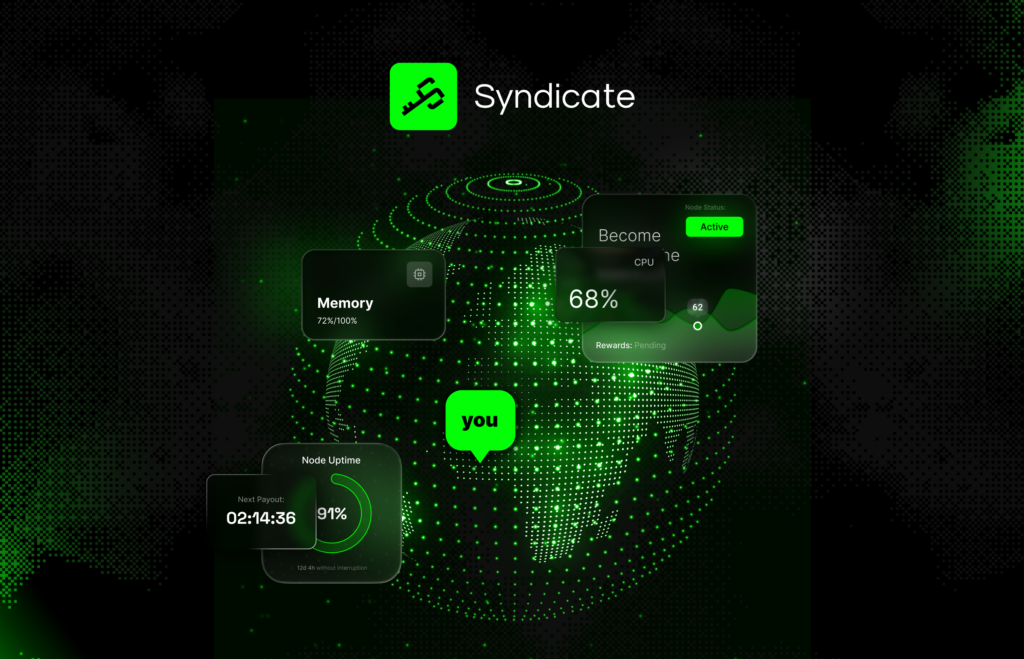
Cryptocurrency works thanks to a decentralized network in which many users participate. One of the key elements of such a network is nodes — the foundation of the blockchain. Without them, the network simply wouldn’t be able to exist. They receive, verify, and transmit information about transactions, ensuring that all data is correct. If they didn’t exist, all data would be stored in a single place — which would make the network vulnerable to attacks. Thanks to distributed data storage, hacking the system becomes much more difficult. Nodes are responsible for the security of the network. If one of the nodes fails or is compromised, the others continue operating normally. All nodes constantly exchange data with each other, maintaining the stability of the entire system.
Essentially, a node is a server that communicates with other nodes in the network. It processes transactions, stores their history, and acts as an archive of all operations that have ever passed through the blockchain.
When a project is just launching or testing its network, it needs to check the entire infrastructure. Maintaining its own servers around the world is expensive, so part of the work is delegated to the community. In exchange, the project team may launch a potential airdrop. It’s important to understand: sometimes the reward turns out to be minimal or even zero.
How to earn with crypto nodes
You can earn from nodes in different ways. It’s a level above regular farming. You don’t just become a user — you become part of the network. Projects reward you for helping test and launch the ecosystem. You only need to choose a project where the rewards are worth it.
Nodes can be different. Some require renting a server — they need to be configured, paid for, and maintained around the clock. Others are lightweight, like in DePIN projects such as Grass: you simply open a browser, launch an extension, and farm passively without extra hassle.
At the same time, it’s important to understand a few things. A project may not pay even if it promised to. It may pay even if it didn’t promise anything. Tokens may end up having no value at all — or, on the contrary, already be trading on the market at a good price.
Some projects offer earnings through installing special devices — hotspots that support the network. This option is simpler: deep technical knowledge is not required. Income depends on network activity in your region, the number of devices nearby, and the installation location. For example, projects Dawn and Aethir.
You launch a node on your own or rented server and participate in a testnet. The project notices this and provides future airdrops, tokens for testing, early access, and increased rewards at launch. Experienced participants usually don’t limit themselves to one project — they distribute their servers across several nodes to reduce risks and avoid depending on the outcome of a single asset.
But honestly: nodes are not just a “get money” button. You need time, basic programming skills, and money for a server. With a грамотный approach, you can count on a stable income. Some nodes bring around 5–10% per year, while others reward participants with additional tokens. Specific conditions depend on the project. However, the project may fail or never distribute the airdrop at all.
Where to find projects with nodes?
There is plenty of information about nodes in open sources, but you will need to spend time studying it. Projects operate on their own schedule: registration can close at any moment, a testnet may end, and conditions may change. The most up-to-date information is best found on the official websites of projects or on aggregators such as nodes.guru. In a project’s Discord communities, you can quickly get help if something stops working or an update is released.
Choose projects with transparent conditions and an active community — this reduces risks. Start with small investments and scale gradually. The better you understand the field, the higher your chances of success. And keep an eye on new developments: decentralized networks evolve quickly and regularly open new opportunities for earning.
How to launch a node
To launch a node, you need basic knowledge, preliminary preparation, and a realistic assessment of the risks.
You need to find and choose a project where you can launch a node. Projects come in two types: with registration and without. Usually everything begins with analyzing the project: who invested, what the team is like, what the idea is, and whether it makes sense to run a node.
The first step is to read the official documentation. If there is an installation guide, it means the node is available for the community. Then you rent a separate server and deploy the node following the guide. It can be a validator node, a storage node, or any other type — it depends on the project.
If you run a node on a home computer, the costs will be small — only electricity and hardware wear. But then you’ll have to keep it running 24/7, monitor internet stability, and ensure an uninterrupted power supply. This can be quite troublesome, so many people choose to rent a server in a reliable data center. In this case, the provider handles all the technical issues: stable power, a fast connection, and support are always ensured, and you can focus on configuring the node itself. Renting a server will cost more: from $7 to $300 per month depending on memory, CPU, disk requirements, and connection speed.
Risks
Not every testnet provides rewards. Some test networks run for years, and projects may change the conditions at the last moment. Even if a testnet promises rewards, in the end you may receive very little.
After launch, the node needs regular maintenance — meaning you should check every day that it is working properly. A node may stop without any visible reason and require a restart — after all, it is a test network. It may also freeze due to insufficient RAM. Another common case: the blockchain releases an update, and without installing it the node simply stops working.
It’s best to check nodes every day. The most convenient way is to set up separate node monitoring that sends requests to the specified address and port and checks whether the service accepts connections. If the node goes down, you immediately receive a notification and can respond quickly.
Node running is not stable income with a guaranteed result, but a long-term bet on the future. The key skill here is the ability to distinguish real projects from those that exist only for short-term hype.
Share this post
Link copied!