






By 2026, the picture has changed dramatically. On-chain perpetuals have turned into a separate market segment with their own L1 appchains, CEX-like UX, and trading volumes that, during certain periods, are comparable to top centralized platforms.
The market is growing not “in words,” but in numbers
DefiLlama data as of the end of February 2026 clearly shows the scale of what is happening:
- Daily trading volume on Perp DEX — $24.28B
- 30-day volume — $924.31B
- Open interest — ~$13.67B
This is no longer an “experimental DeFi toy,” but a full-fledged trading segment. According to estimates based on DefiLlama data, in 2025 perp DEX added trillions in turnover, when on-chain derivatives stopped being niche.
Dynamics relative to centralized exchanges
In May 2025, Grayscale estimated the share of perp DEX in total perpetual futures trading volume at approximately 5.4% (on a 30-day window ending 31.05.2025). Simply put, for every $100 traded on CEX, DEX accounted for only about $5 — clearly a secondary role.
But by November 2025, the picture began to change. Several independent studies recorded a historical maximum — around 11.7%. At first glance, the figure seems modest, but behind it stands a fundamentally different balance: now for every $9–$10 of CEX volume, there was already a full $1 on DEX. In less than six months, the ratio effectively doubled.
This is not just metric growth — it is a shift in status. DEX stopped being the “minor league” and began to be perceived as a full-fledged participant in the derivatives market.
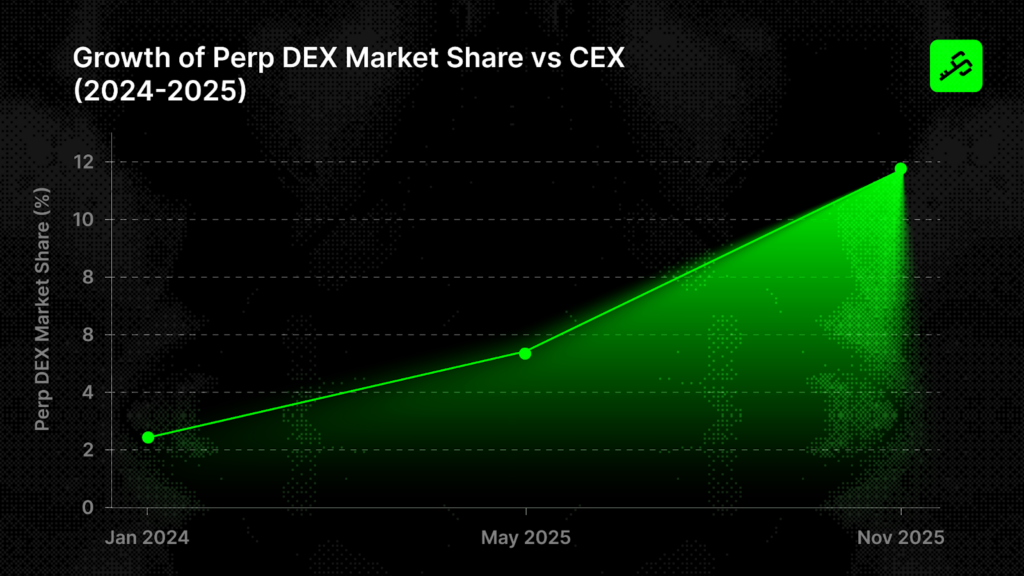
The point is not in “one exact number.” What matters is the trend itself: perpetual trading turned out to be the first category where migration on-chain is happening the fastest. And this is no coincidence — the product seems created for the new infrastructure. The mechanics of leverage, liquidations, and funding organically fit into the architecture of fast networks and specialized appchains that have emerged in recent years. Where the chain used to slow things down, everything now works the way a trader expects.
Perp DEX Leaders in 2026
If we look at the market through the lens of 30-day trading volume, the picture resembles a classic “winner takes all” structure: several giants at the top — and a long tail of everyone else.
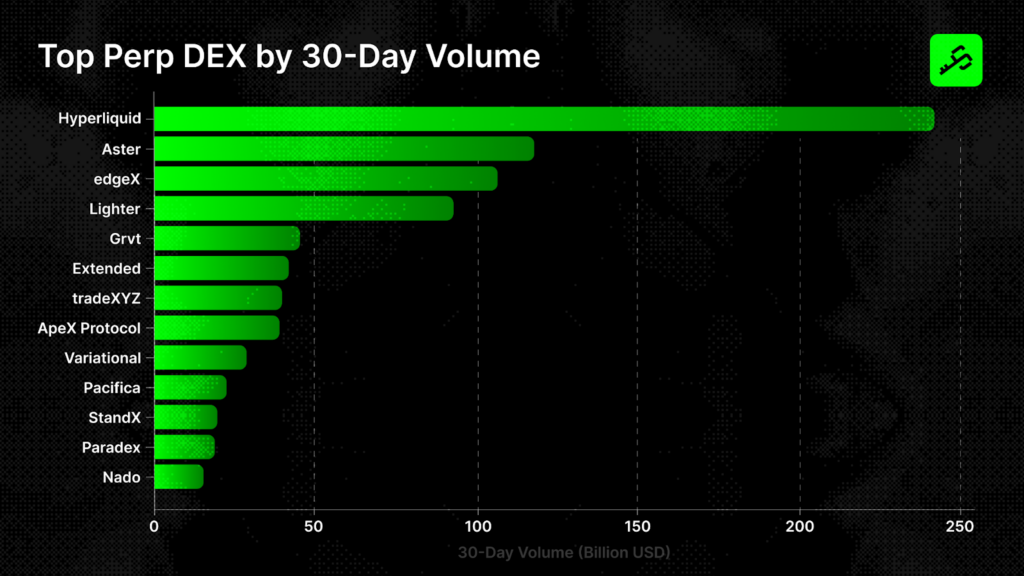
The market is no longer “one protocol,” but Hyperliquid shows clear dominance across aggregate metrics.
Why traders are moving to Perp DEX (and why specifically in 2026)
- Non-custodial model and fewer “exchange” risks. In Perp DEX, assets remain under the user’s control. On CEX, funds are stored in the exchange account — with all the implications: freezes, withdrawal limits, internal rules that can change at any moment. For an active trader, this has become not philosophy, but practical risk management.
- Permissionless access. On-chain platforms usually do not require complex KYC verification. This makes them especially attractive for traders from jurisdictions where access to CEX may be restricted.
- Trading experience similar to CEX. Modern Perp DEX no longer look like complex DeFi platforms. Fast trading systems with a clear order book, low latency, and predictable liquidations — in feel, almost like centralized exchanges. As a result, not only retail traders but also active traders, market makers, and algorithmic strategies are entering.
- Flexibility and new opportunities for traders. Perp DEX implement new products and mechanics faster: alternative margin models, improved MEV protection, custom markets, and listings without long procedures. Launching a new instrument here is easier than going through a multi-stage listing process on a major exchange. Therefore, traders often gain access to interesting mechanics earlier than they reach CEX.
- Faster listing dynamics. Without a centralized approval committee, markets can appear quickly — this is especially important at moments when interest in a particular asset rises sharply.
- Transparency and verifiability. On a centralized exchange, a trader is forced to trust the numbers shown by the exchange itself. Real fees, reserves, and liquidation mechanics are almost impossible to verify. In Perp DEX, the data is open: fees, open interest, and fund movements — all of this can be analyzed independently.

Share this post
Link copied!