




Prediction markets started as a simple and almost romantic idea: people put money on real-world events, and the price shows what the “crowd thinks”. Who will win the election? Will rates be cut? Will bitcoin rise by the end of the week? A user comes in, chooses “Yes” or “No,” and the market seems to collect the crowd’s opinion into one number.
But in 2026, that picture is badly outdated. Today, prediction markets look less and less like a place where ordinary people calmly debate the future. They look more and more like a high-speed trading venue, where intuition and “I believe / I don’t believe” matter less than speed, models, arbitrage, scalping, automation, and the hunt for future rewards.
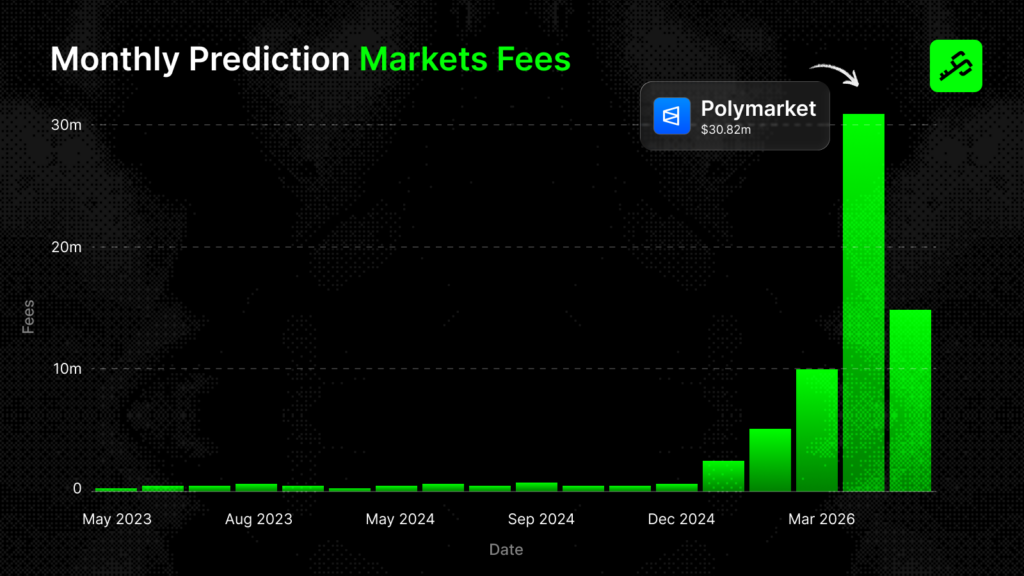
Polymarket remains the main symbol of the sector and calls itself the largest prediction market, where you can trade outcomes in politics, sports, crypto, economics, culture, and other categories. But inside the platform itself, the structure of demand is changing: more activity is moving into short markets, especially crypto “up/down” contracts with 5- and 15-minute windows.
The Big Shift: Markets Became Shorter, Faster, and Bot-Driven
In the past, prediction markets were associated with long-duration events: elections, court cases, sports tournaments, rate decisions. A user placed a bet, waited days, weeks, or months, and the market really looked like a collective forecasting tool.
Now most activity is moving into short markets that close in 5 or 15 minutes. This is no longer about “who will win the election,” but more like “where will bitcoin move in the next few minutes”. In other words, prediction markets are turning into a fast trading terminal. And this is exactly where bots are entering in force.
A large share of short-market activity does not come from ordinary users: about 55% of activity in 5-minute markets and about 62% in 15-minute markets comes from bots. That does not mean every bot is consistently profitable, but the market has become heavily automated.
Short markets are especially lucrative for platforms. They account for about 74% of monthly volume inside Polymarket’s crypto segment and roughly 16% of the platform’s total volume. Yet they generate almost 40% of daily fees — around $400,000 per day on average. In other words, users enter more often, exit more often, make more mistakes, and the platform earns more often.
Financial Times also wrote that Polymarket and Kalshi’s 5- and 15-minute crypto contracts attract around $70 million in daily trading volume, and short contracts already make up more than half of all crypto trading on these venues.
In essence, prediction markets have become much more aggressive. The average user comes in to “guess the direction,” while algorithms are already working against them. They react to any price move faster than a human and use every fraction of a second as an opportunity to make money.
That is why the new prediction market is no longer just about forecasting, but about speed, automation, and fighting for microscopic edge.
Four Types of Bots That Pull Money From the Market
Inside short markets, you can identify several strategies used by experienced participants. These strategies are especially relevant for AI bots, which can analyze a huge stream of incoming data and make split-second decisions to buy or sell a position.
- The scalper waits until the final seconds of the market, when the outcome is almost clear, and places orders around $0.98–$0.99 on the winning side. The profit is a cent or fractions of a cent per contract, but if you repeat it hundreds of times and in large size, the total becomes meaningful. The risk is that in the final seconds the market can reverse sharply, and an almost “safe” position can suddenly turn into a loss.
- The arbitrage watcher uses faster external data, such as prices from major crypto exchanges. If BTC on Binance or Coinbase has already moved, but Polymarket has not fully updated yet, the bot tries to capture the difference before the market catches up.
- The spread collector looks for moments when both sides of the market can be bought for less than $1 combined. This is especially possible during sharp BTC moves inside a short window. In practice, the bot tries to collect “Yes” and “No” bets so that one outcome reliably covers the cost of the pair.
- The flipper is closer to a regular trader. It takes directional risk, buys one side, and quickly sells it when the price moves. But it does this not “by eye,” but through models of short-term momentum, order imbalance, and price behavior.
All these strategies share one thing: short forecast horizon, speed, execution, and tiny advantages repeated thousands of times.
If average users lose money, why don’t they leave? Short markets deliver fast results and the feeling that capital can be multiplied in just a few minutes. It is a mix of trading, memecoins, and a mini gambling game. The position opens fast, the outcome comes fast, and the emotional hit comes fast too.
The average user does not necessarily need a rational risk profile. They need a chance. Even if the probability is low, the fact that “theoretically you can quickly grow your deposit” keeps attention locked in. For professionals, this is an ideal environment. Retail creates volatility, volume, and liquidity. Bots and experienced traders take the small but repeatable edges. That is why short markets are becoming less like prediction markets and more like an attraction where a human has to bet against an algorithm.
In the end, prediction markets are gradually moving away from their original idea. At first, it looked like an interesting tool where people bet on real-world events and the market turned into a living sociological indicator: who will win, what will happen, where public opinion is heading. But now a completely different layer has grown on top of that idea. Prediction markets are becoming a venue for arbitrage traders, traders, airdrop hunters, multi-account operators, and bot farms that come not to “predict the future,” but to squeeze profit out of speed, volume, spreads, and platform mechanics.
That does not mean there is no room left for ordinary users. There is: people still use Polymarket and similar platforms the way they were originally intended — to bet on elections, sports, crypto, and economics, and to test their views with money. It’s just that such users no longer dominate. The market has become faster, harsher, and the average person is more often competing with algorithms, account farms, and players who came not to guess, but to extract edge.
Share this post
Link copied!