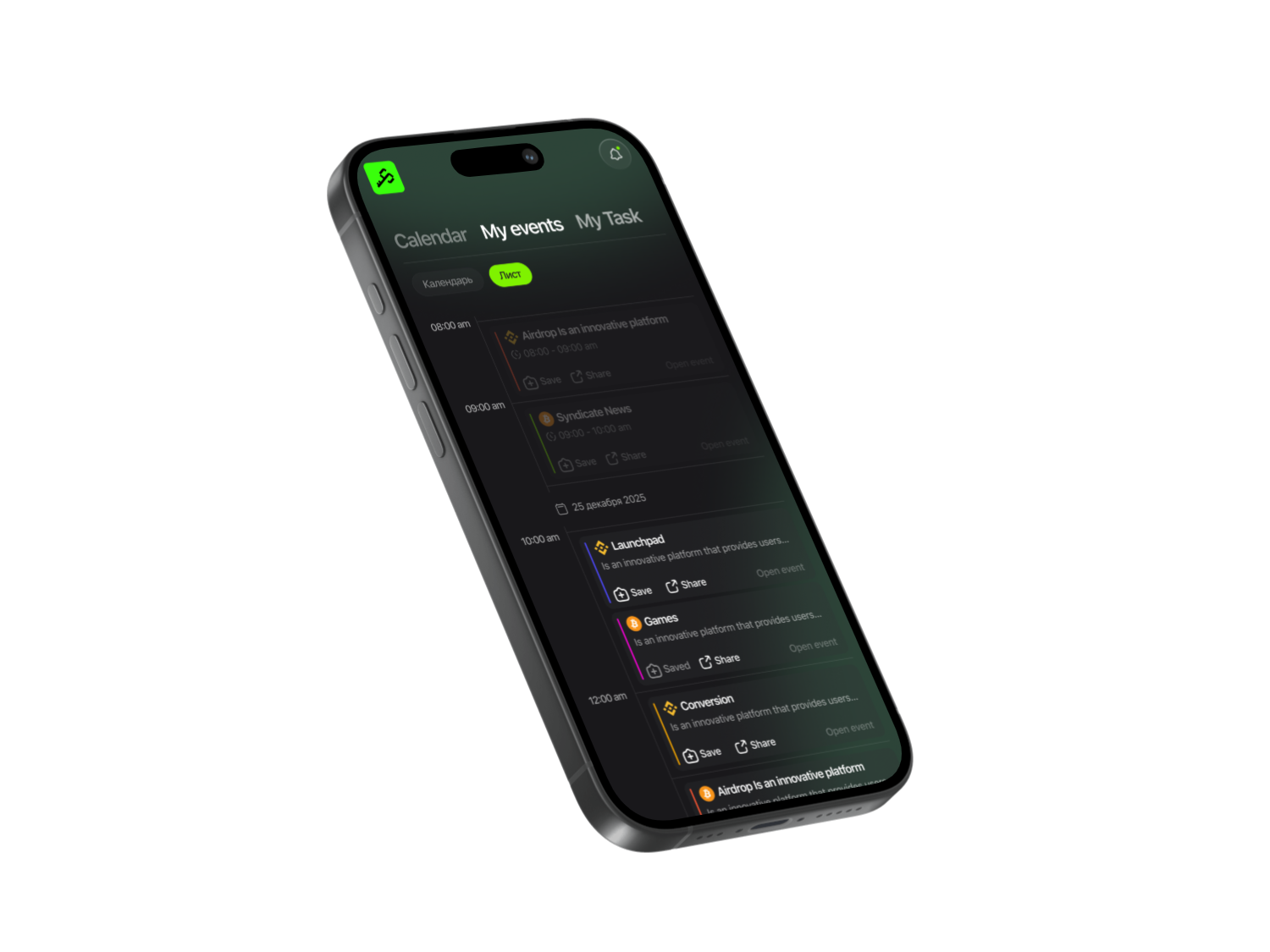


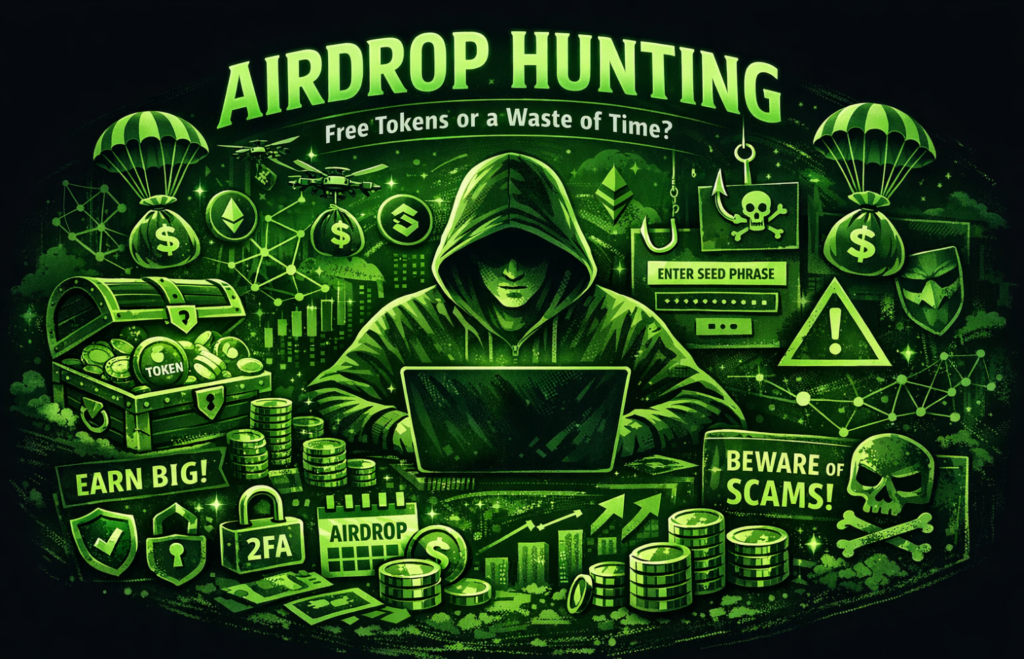



Airdrops are a promotional mechanism in which a blockchain startup distributes its tokens for free to early active users who complete certain requirements. This helps attract attention, onboard new users, and build an engaged community around the project.
What is Airdrop Hunting?
Airdrop Hunting is the active search for and participation in cryptocurrency giveaways. It is not just a chance to obtain digital assets at no cost. The process has evolved into a multi-layered, highly competitive activity that requires a thoughtful approach, financial spending, and significant time investment. Airdrop hunting is no longer entertainment. Today, it is a competitive niche with professional players.
Airdrop hunters are people who deliberately search for new projects without a launched token and actively use them in order to receive free coins once distribution happens. If you are a beginner, forget about mass farms with 100+ addresses. High transaction fees and inevitable sybil filtering will almost certainly leave you at a loss. Focus on 2–3 high-quality accounts. Treat them like real users—choose projects that genuinely interest you and interact with them meaningfully. Bet on quality, not quantity.
Advantages of participating in airdrops:
- Earning without initial investment
- Hands-on exposure to innovative projects and blockchain technologies
- Potential for major profit—history includes distributions worth tens of thousands of dollars from a single drop
Disadvantages and pitfalls:
- Significant time costs with uncertain results
- Many projects never conduct a distribution, making efforts pointless
- Fake airdrops are often used for phishing and theft of seed phrases or funds
Airdrop hunting is a hybrid of strategic gameplay and crypto analytics. Some treat it as a hobby, others turn it into a source of income. Regardless of the approach, success directly depends on caution: carefully select projects and never ignore security measures, otherwise you risk losing funds instead of making a profit.
How Airdrop Hunting Works
Serious airdrop hunting differs from a one-time swap on Uniswap in hopes of getting lucky. It is a long-term strategy based on a methodical and structured approach.
The basic tactic is the use of sybilling (Sybil attack). Projects plan to reward 10,000 unique participants. The hunter’s task is to appear as all 10,000 of them. A person generates hundreds or thousands of individual wallets. Their toolkit includes anti-detect browsers (to create a unique digital fingerprint for each wallet), proxy services (to assign each wallet a separate IP), and automated tools to coordinate the entire infrastructure. They create the illusion that 1,000 addresses belong to 1,000 independent users. They systematically participate in new projects to increase the chances of receiving free tokens. They create multiple wallets, test new platforms and protocols, and complete required tasks (token swaps, liquidity provision, joining Discord communities).
However, simply generating a fresh wallet and immediately interacting with a target project is not enough. Platforms have learned to detect multi-account behavior. Participants first “warm up” addresses. They fund them with ETH through different exchanges (avoiding transfers from a single source), perform scattered transactions in well-known protocols (Uniswap, Aave), purchase NFTs, and register a Gitcoin Passport (proof of user authenticity). A wallet must demonstrate organic activity and transaction history.
Next, the hunter selects 5–10 promising projects without a launched token. They systematically run all wallets through the chosen platforms, generate the required trading volume, maintain weekly or monthly activity, and use the full functionality (swaps, bridges, liquidity provision).
How to Start Airdrop Hunting
1. Follow the news.
To avoid missing airdrops, regularly check specialized platforms: airdrop calendars, websites, and crypto communities on social media. This ensures you stay informed about new distributions.
2. Stay active in projects.
Follow their Twitter, Telegram, and Discord accounts—this helps you meet participation requirements and learn about new drops first. Join communities, communicate, track updates, and complete tasks.
3. Create a dedicated crypto wallet only for airdrops
This protects your primary funds. Make sure the wallet supports the required blockchain network.
4. Participate in multiple projects across different blockchains.
5. Think about security.
Airdrops can be profitable, but many scams exist. Always verify a project’s reputation before participating. Do not follow suspicious links and never share private keys or seed phrases. Use only trusted information sources.
Read next

How to start your journey in retrodrops
Risk Management: Staying Safe While Hunting
Airdrops offer the chance to receive free tokens, but risks must be remembered. The main danger is scammers and fake distributions. Malicious actors use fake airdrops to steal personal data or money.
Participation often requires providing personal information—name, email, and other details. It is important to be careful about whom you share this data with and to protect your privacy.
Precautionary measures:
- Carefully verify the authenticity of the project’s domain name, avoid suspicious links, and do not download files from unreliable sources.
- Before providing personal data, review the project’s data-handling policy. Ensure proper protection measures are in place and that information is not shared with third parties without consent.
- Create a separate email address exclusively for airdrop registrations to reduce spam and phishing risks.
- Enable two-factor authentication for email and all services used for distributions.
- Regularly change passwords for airdrop platforms, email accounts, and related services. Use strong unique combinations or a password manager for secure storage.
- Never disclose your seed phrase under any circumstances.
- Keep systematic records of your activity—track all projects you participate in.
How to Tell an Airdrop Is a Scam
- Unrealistic promises: be suspicious of giveaways offering disproportionately large rewards or guaranteed returns.
- Incomplete or vague documentation: fraudulent initiatives usually lack a professionally written whitepaper, a clear roadmap, or detailed information about creators and goals.
- Poor-quality communication: grammar mistakes, typos, and an unprofessional tone in official channels often signal fraud.
- Requests for confidential data: legitimate airdrops will never ask for private keys or wallet credentials.
- Unverifiable team: always confirm that the people behind the project actually exist.
Stay attentive, analyze information carefully, and trust your doubts. Use only trusted platforms for participating in distributions, always verify project legitimacy, and never share private keys or wallet data with third parties under any circumstances.
Share this post
Link copied!